
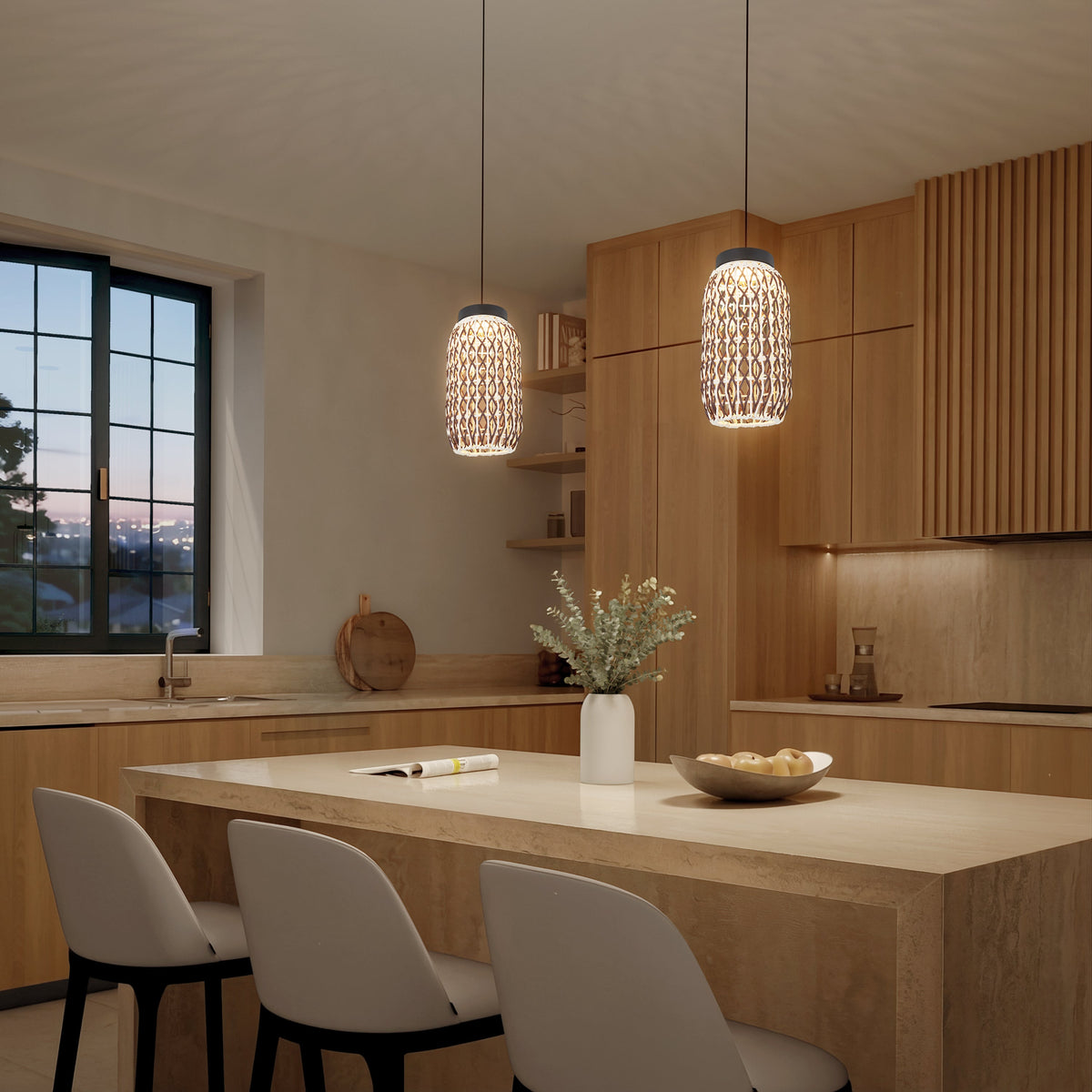
For Airbnb interior design, the upgrade that moves the needle on bookings is lighting. The fixtures that impress guests share three things: a warm 2700K to 3000K colour temperature, layered ambient and task sources instead of one overhead bulb, and a statement piece (pendant, chandelier, or sculptural sconce) that pulls the cover photo together. Cold-white big-box overheads are the most common mistake hosts walk past.
Lighting is the first thing guests see in your listing photos and the first thing they react to once they step inside. Get it right and the perceived value of every other piece in the rental rises with it. The fixtures below, from sculptural pendants and chandeliers to motion-sensor entryway sconces, are what designers and experienced Canadian Superhosts reach for first.
What Do Guests Actually Notice About Lighting?
Guests rarely write “fluorescent overhead” in a review, but they register the feeling immediately. Three things land in seconds: how bright the room is, how warm the light feels against skin, and whether the fixture itself looks intentional or invisible.
A single cold overhead reads as “budget rental” almost instantly. Warm layered light reads as “hotel” or “boutique stay.” That difference is what separates a four-star night from a five-star one. Dimmers show up in five-star reviews more often than hosts expect, because guests notice being able to dial the room down for a late check-in, an evening unwind, or a relaxed morning.
The biggest blind spot is what the lighting looks like in the listing’s cover photo. The thumbnail is the first thing a prospective guest sees in search, and a warm, well-lit shot beats a cold one on click-through, every time.
The Three-Layer Rule for Every Rental Room
Every well-lit room is built on three layers. The ambient layer sets the room’s baseline, and is typically the overhead (like a pendant, chandelier, or flush mount). The task layer handles specific jobs (a bedside lamp for reading, an under-cabinet strip for the kitchen counter, a vanity light for the bathroom). The accent layer adds mood and pulls attention to features (a wall sconce, a floor lamp, a picture light).
A rental bedroom that works: a dimmable overhead with a pendant or flush mount, plus two bedside lamps with built-in USB charging, plus a floor lamp by a reading chair. Strip that down to one overhead and the room reads as a college dorm.
The cheapest upgrade a host can make is putting every ambient fixture on a dimmer. That single move shows up in five-star reviews more than almost any other. A statement overhead with a built-in dimmer skips the wall-switch retrofit entirely.
Fixtures That Photograph Well in Listing Photos
Light fixtures show up in the hero shot of nearly every rental listing. They either improve the photo or drag it down. The ones that consistently improve it: sculptural pendants with a strong silhouette, warm-metal sconces in brushed brass, aged nickel, or matte gold, and single statement flush mounts that look chosen rather than picked off a builder’s catalogue.
The ones that drag it down: flat ceiling cans on their own, dated polished-chrome bar lights, and cold-white LED panels. None of those photograph well no matter how good the rest of the room looks.
One bulb swap most hosts overlook: the 5000K daylight bulb that ships pre-installed in a lot of fixtures. Trade it for a 2700K to 3000K warm white version and the photos warm up immediately. The fixture stays exactly as it is, and only the bulb temperature changes.
How to Light an Entryway Guests Walk Into After Dark
Roughly half the guests checking into a short-term rental arrive after sunset. The entryway is the first thing they see, and a dark or under-lit one sets a bad tone for the rest of the stay.
Lumens measure how much visible light a fixture produces. Plan for 700 to 1,000 at the front door, mounted 65 to 70 inches above the ground.
Reach for IP44 (splash-resistant from any direction) at minimum for covered porches, and IP65 for entry points fully exposed to the weather. Canadian winters and freeze-thaw cycles demand finishes built to hold up, and powder-coated steel and corrosion-resistant aluminum outlast cheaper alternatives by years.
Motion sensors on side doors and rear entries earn back their small added cost. Guests pick up on the security signal in reviews, and the fixtures deter break-ins during cleaning and turnover windows. The minimum is one sconce by the door; the upgrade that consistently shows up in five-star reviews is two sconces flanking the door plus a motion-activated step light. Artika’s outdoor wall lights collection covers nearly every entryway scenario.
The Lighting Mistakes That Drop Your Review Score
Three patterns show up in negative reviews more than the rest.
The first is single-source overhead lighting. One bright cold-white fixture in the middle of the ceiling and nothing else. Guests describe these rooms as “harsh” or “like a motel.”
The second is no dimming. Every light on full or off, no middle ground. A guest who wants to watch a movie or read in bed has no option but to flip the switch off entirely.
The third is mismatched bulb temperatures across one room. A 5000K lamp here, a 2700K lamp there, an overhead somewhere in between. The room photographs as patchwork instead of designed. Set every bulb in a single room to the same temperature, around 2700K to 3000K in living spaces and bedrooms, 3000K to 3500K in bathrooms and kitchens, and the listing photo improves immediately.
The fixtures that fill a rental’s calendar are the ones that photograph warmly in the cover shot and feel like a stay rather than a sublet once guests step in. Layer the light, dim the ambient, swap out any cold-white bulbs, and don’t ignore the front entry. For the bathroom vanity lights that consistently anchor strong listing photos, Artika’s bathroom collection is built around the sculptural shapes and 3000K to 3500K range guests notice.
Frequently Asked Questions
What is the best lighting for an Airbnb rental?
A three-layer setup works in almost every room: an ambient overhead, task lighting for specific jobs, plus an accent or floor lamp for mood. Use 2700K to 3000K warm white in living areas and bedrooms, and 3000K to 3500K in bathrooms and kitchens. Put every ambient fixture on a dimmer so guests can set the room to their preference. A single cold-white ceiling light is the most common mistake hosts make.
Should Airbnb fixtures be dimmable?
Yes, and it’s one of the upgrades that earns five-star reviews most consistently. Guests notice the ability to set the room for a late check-in, a movie night, or a slow morning. The simplest path is a dimmable LED-integrated fixture paired with a standard wall dimmer. No app to learn, no smart system the cleaner has to reset between stays.
What colour temperature should Airbnb bulbs be?
Choose 2700K to 3000K for living areas and bedrooms (warm, hotel-like) and 3000K to 3500K for bathrooms and kitchens where guests groom or cook. Skip 5000K daylight bulbs since they read clinical and ruin the listing photos. Quick test: if a room’s photo on your phone shows a blue tint, swap that bulb for warm white before the next listing refresh.
Are smart lights worth installing in a short-term rental?
Smart bulbs make more sense outdoors than indoors. Motion-activated entryway lights and scheduled exterior fixtures earn their keep on safety and curb appeal. Indoor smart bulbs introduce a learning curve guests don’t always want to navigate, and they can fail in ways a standard bulb can’t. Standard dimmable LEDs on a regular wall switch deliver more value with less friction for both guests and cleaners.